Cybersecurity Challenges in Operating Systems
In today’s hyper-connected world, operating systems are more than just platforms to run applications — they are the frontline defenders against cyber threats. As OSs evolve, so do the complexities and risks surrounding them. This blog dives into the key cybersecurity challenges that modern OSs face and what’s being done to counter them.
Common OS Cybersecurity Challenges
- Privilege Escalation: Attackers exploit software bugs to gain unauthorized access to higher user rights.
- Zero-Day Vulnerabilities: Unknown flaws in an OS that are exploited before a fix becomes available.
- Malware & Ransomware: These can take over the entire operating system, encrypting files or stealing sensitive data.
- Unpatched Systems: Many systems remain unsecure due to delayed updates or patches.
- Weak User Authentication: Password-based systems are still widely used and vulnerable to brute-force attacks.
How Operating Systems Address These Issues
- Regular security updates and patches
- Built-in antivirus and firewall tools
- Two-factor authentication mechanisms
- Sandboxing and process isolation
- Encryption of user data and files
Real-World OS Security Incidents
Examples of notable attacks include:
- WannaCry Ransomware: Exploited a vulnerability in Windows OS to infect over 200,000 computers globally.
- SolarWinds Hack: Involved compromised updates and highlighted the risks of third-party software integration.
Watch: Operating System Security - Explained
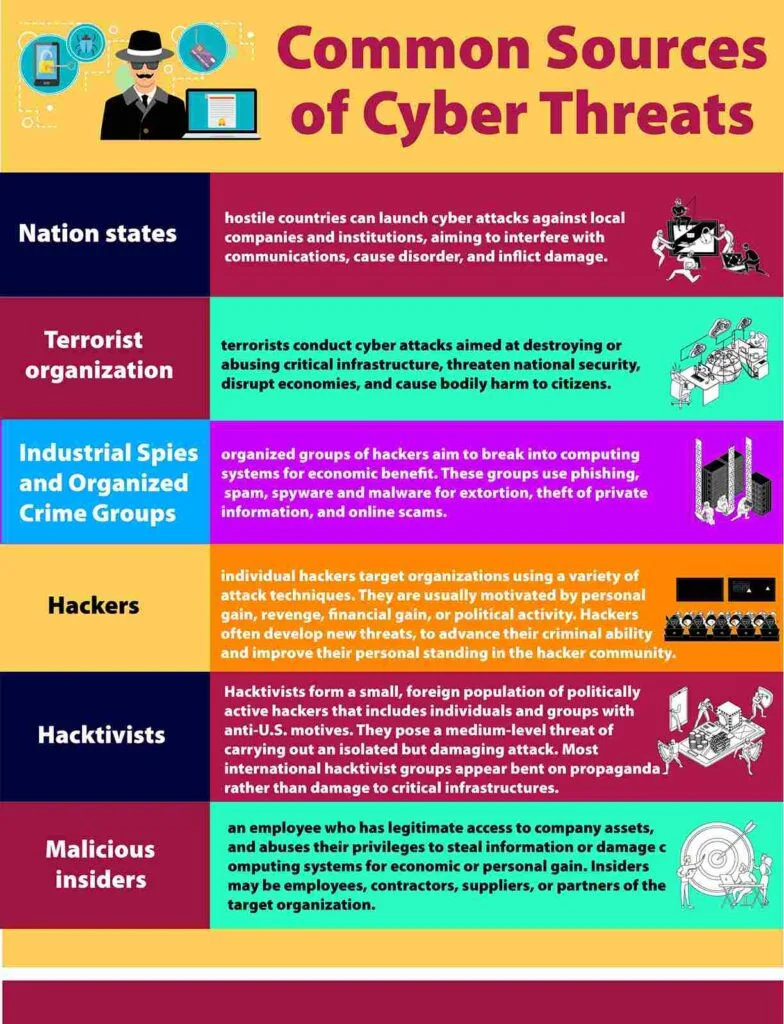
Infographic: Common Cyber Threats


Good work
ReplyDeleteInformative
ReplyDelete